Ephemeral
Phase I
2021
High School
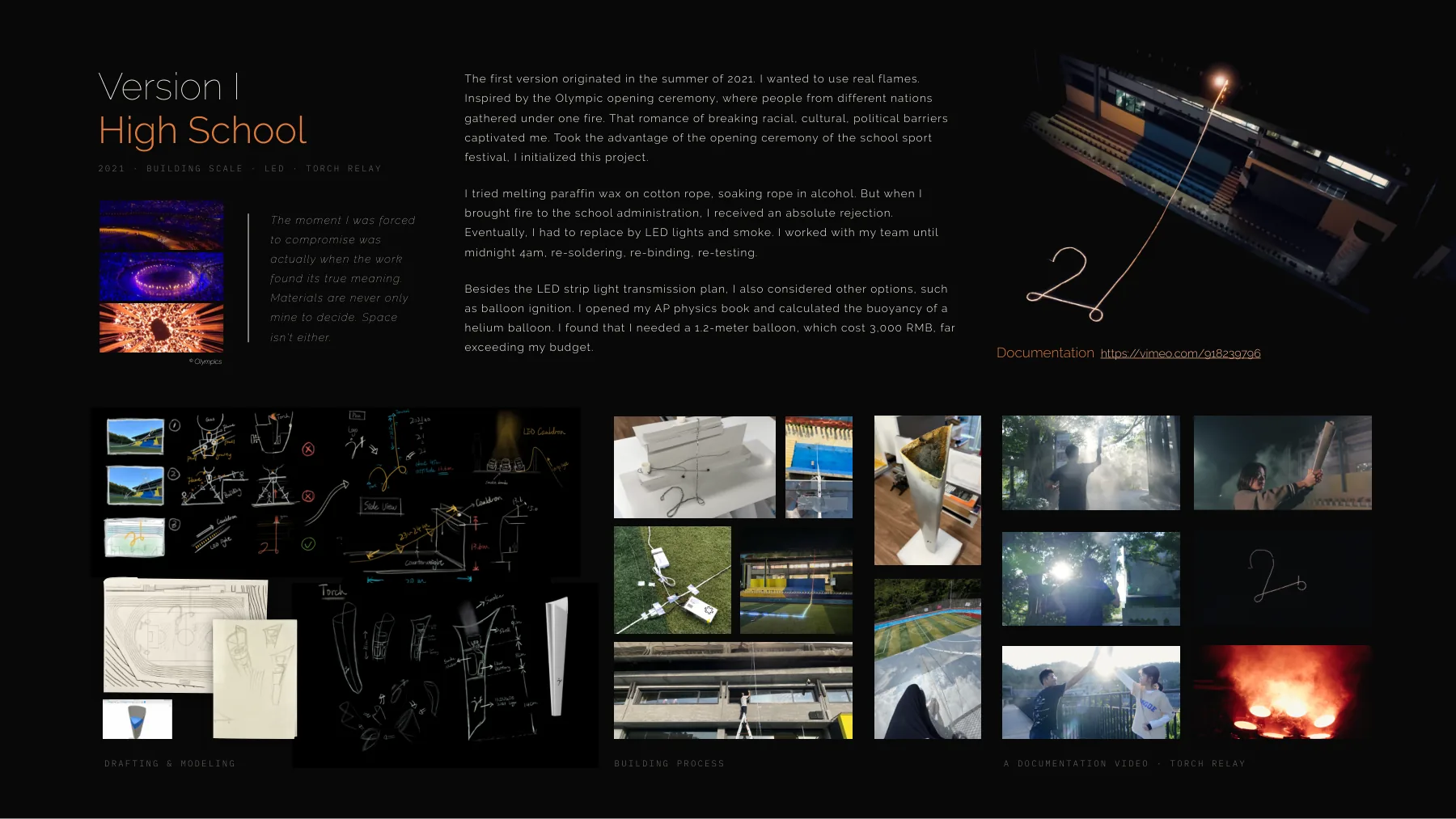
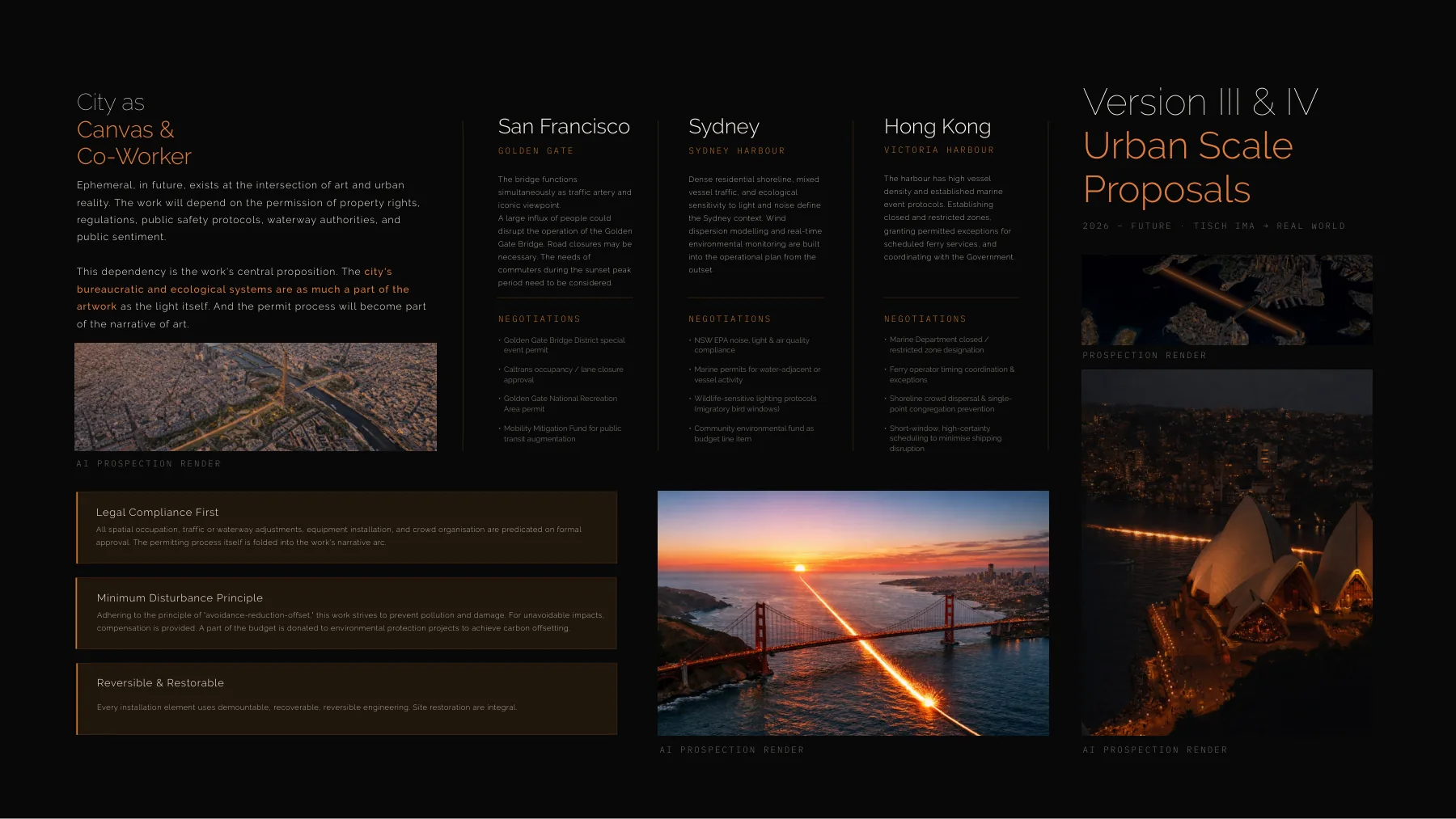
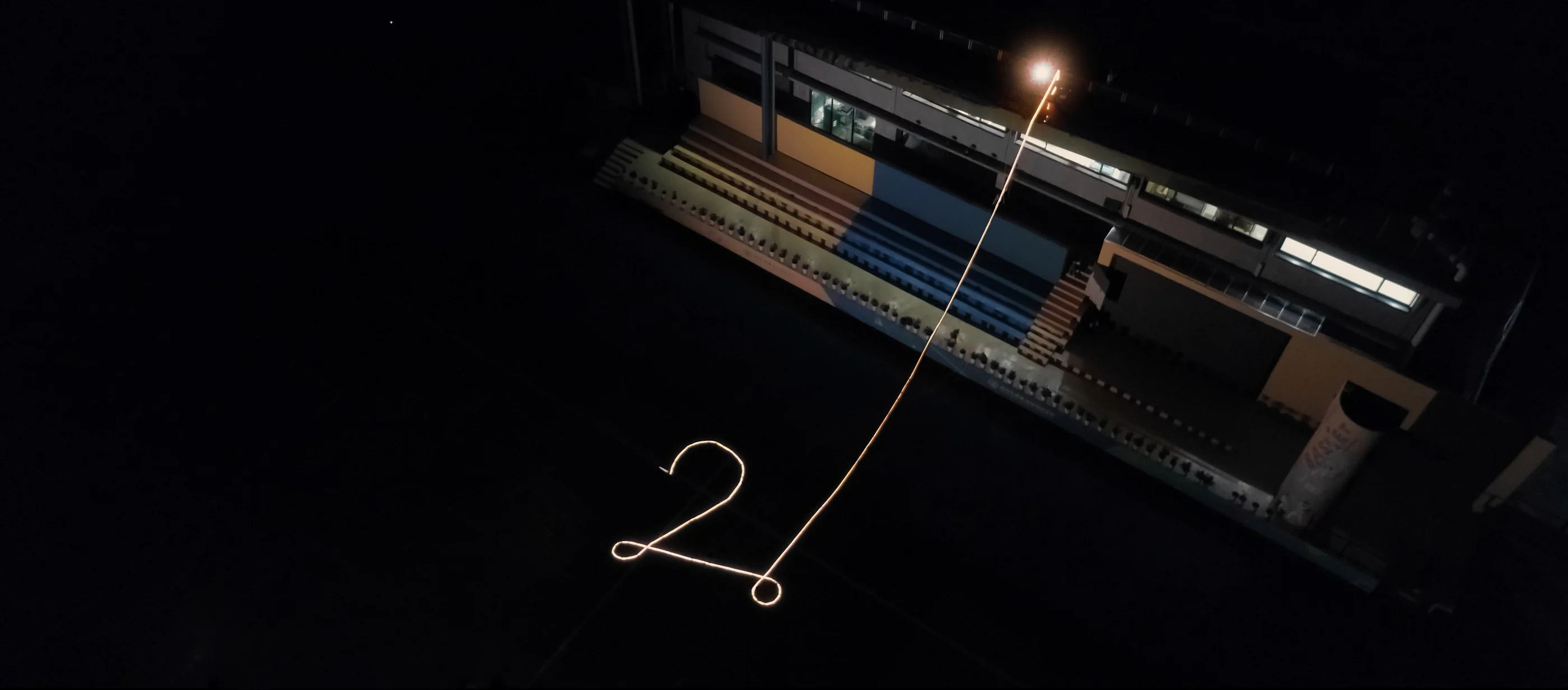
LED and smoke. A fifty-meter light strip from the ground to the rooftop, two transformers, one hanging in mid-air. A negotiation with institutional machinery.
Phase II
2024
NYU Shanghai
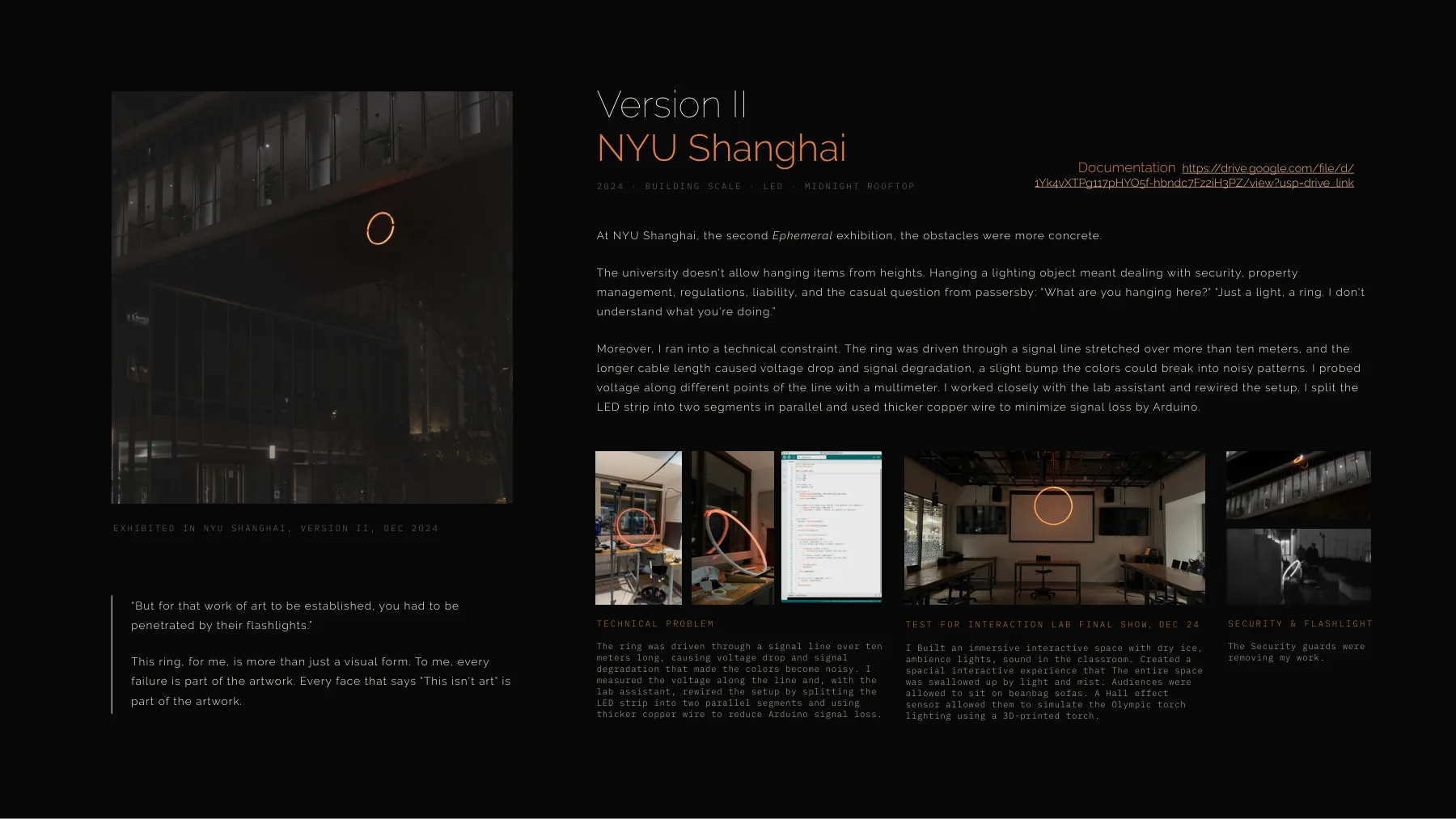
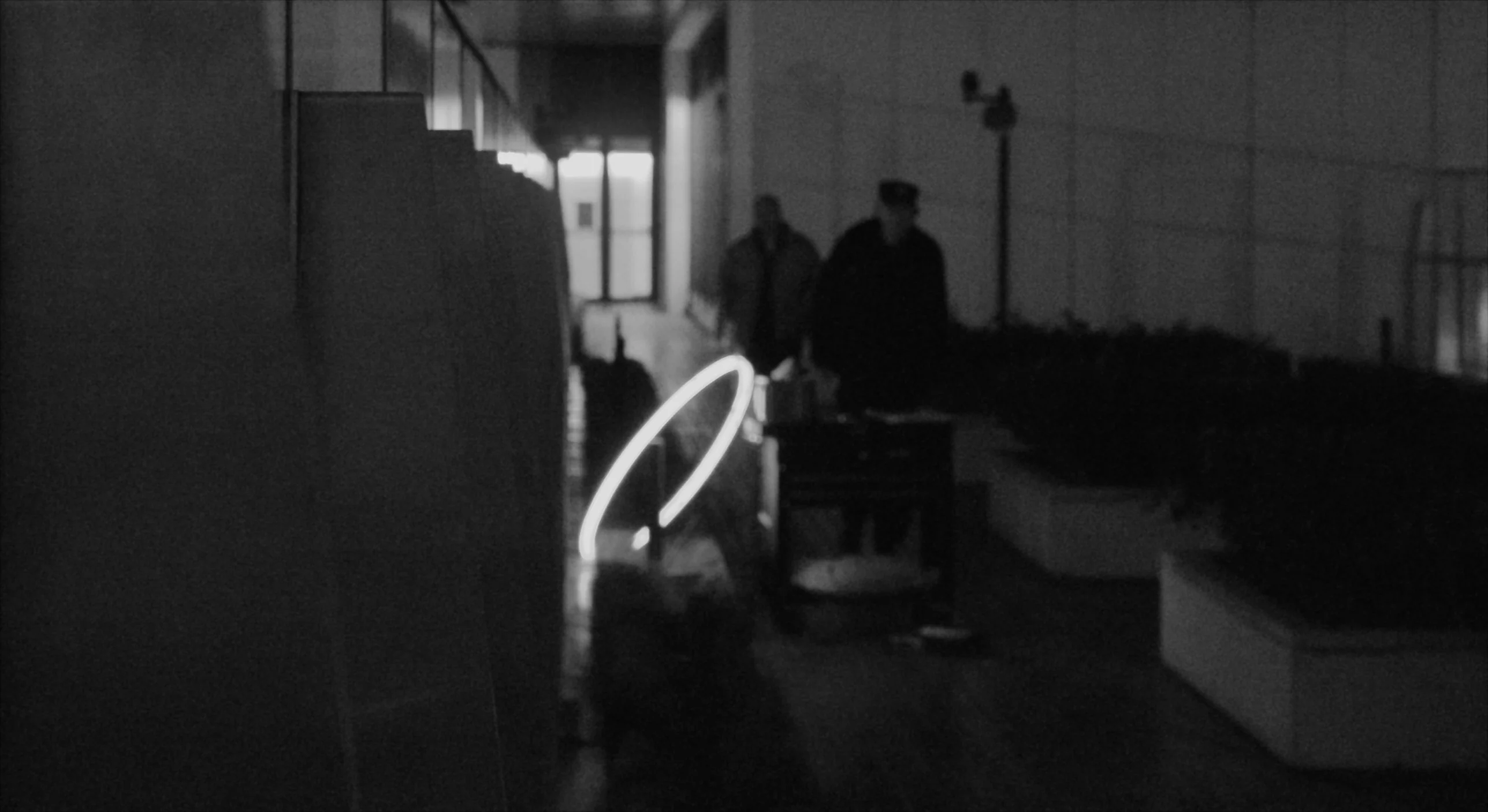
Hanging items on the exterior of the building is prohibited. At midnight on the roof, repeated negotiations with security guards. Resistance was the material; flashlight beams were co-authors.

Phase III–IV
2026 →
Urban Scale
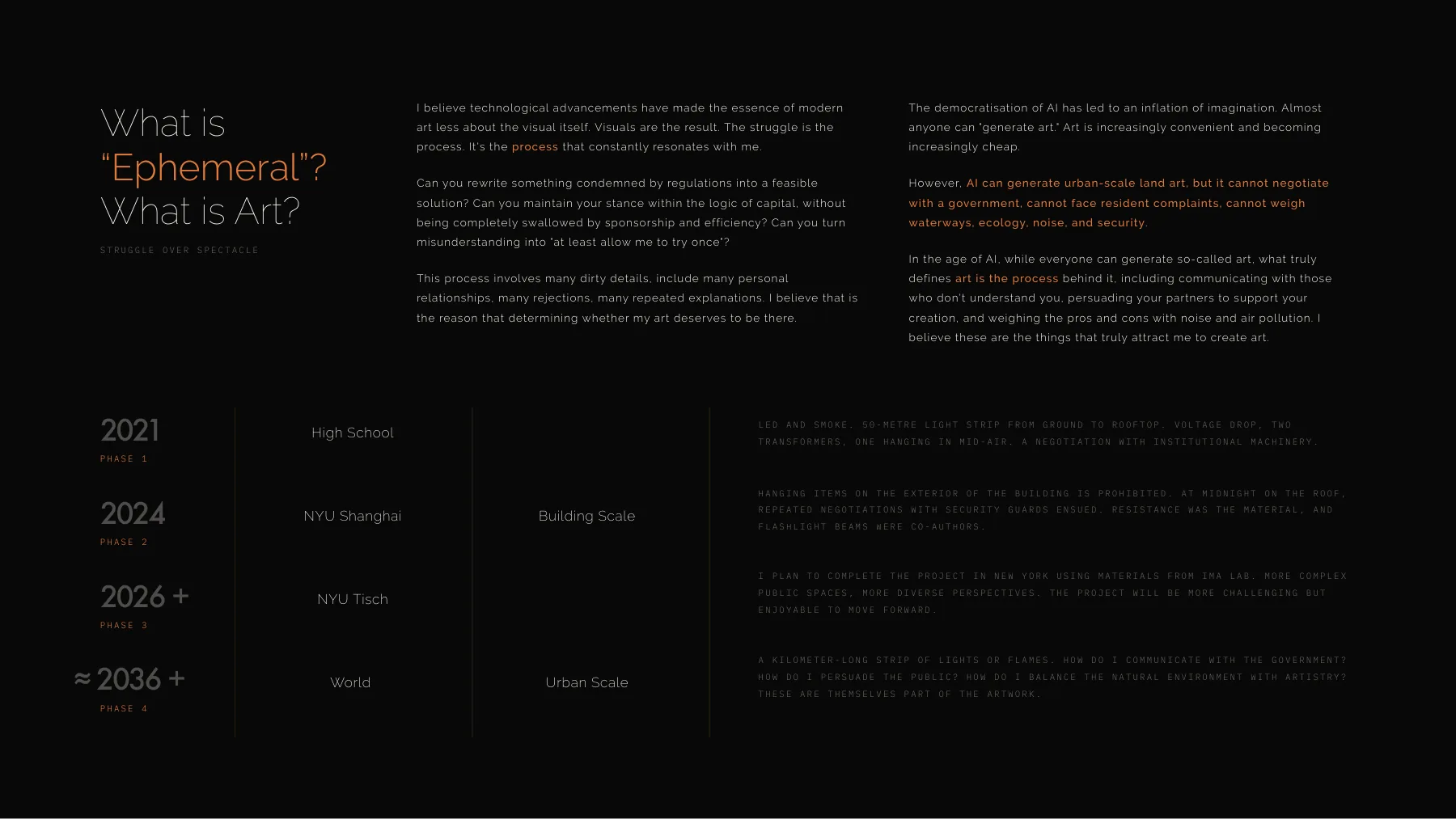
A kilometer-long line of light or flame across a city. Permits, waterway authorities, ecology, noise and public sentiment become part of the work.


Ephemeral
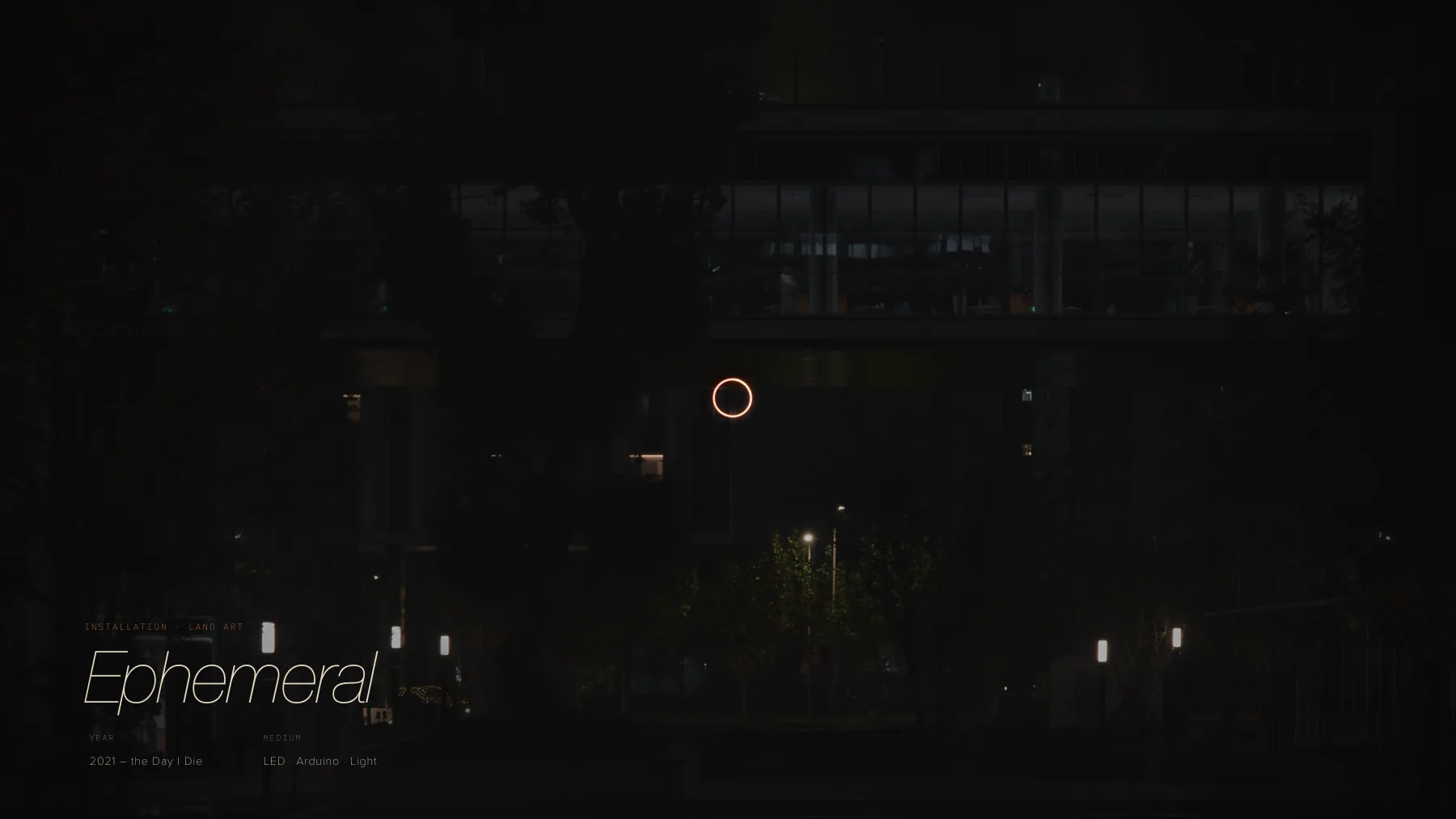
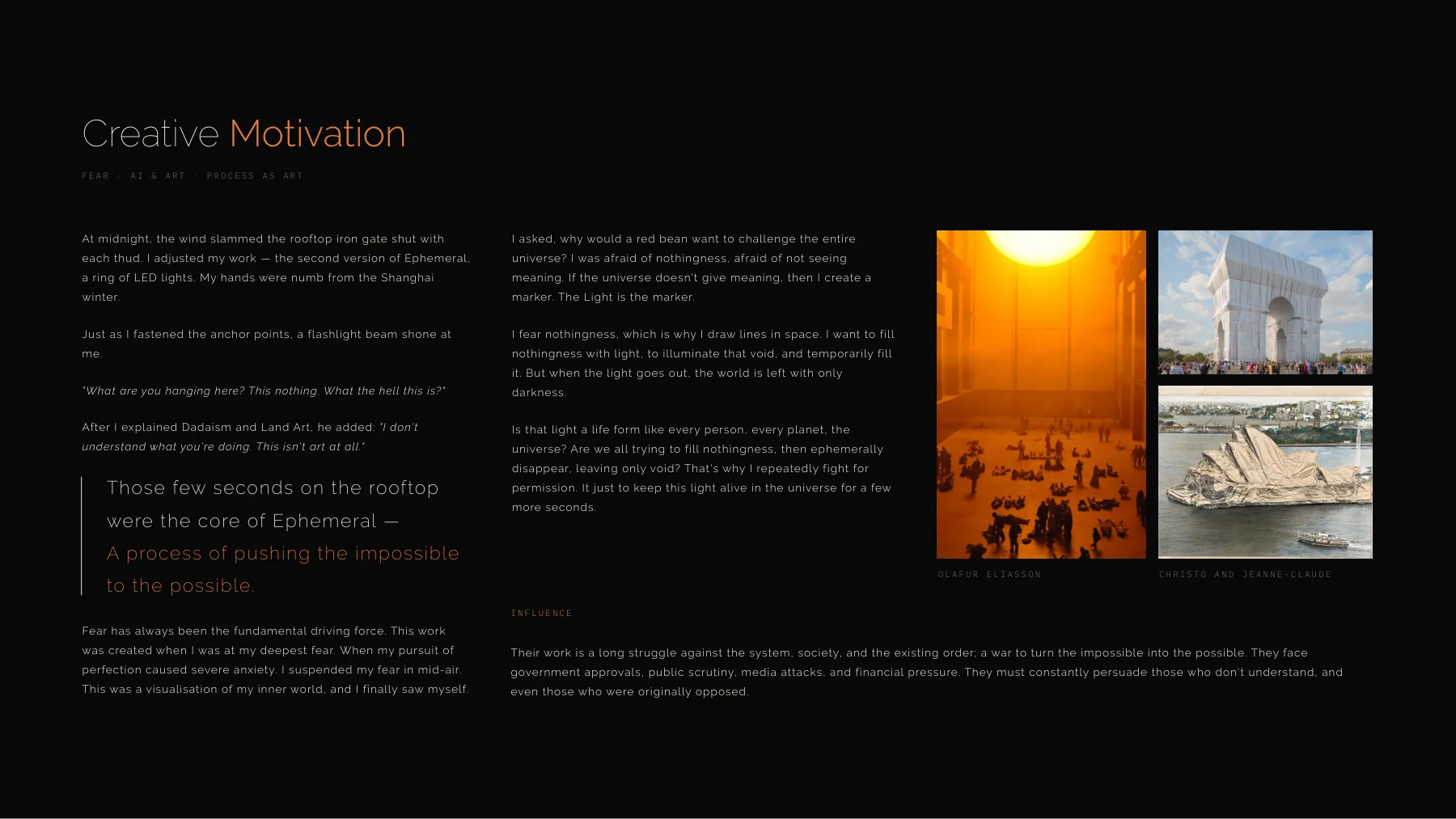
“What are you hanging here? … I don’t understand what you’re doing. This isn’t art at all.”
On the rooftop, NYU Shanghai, 2024
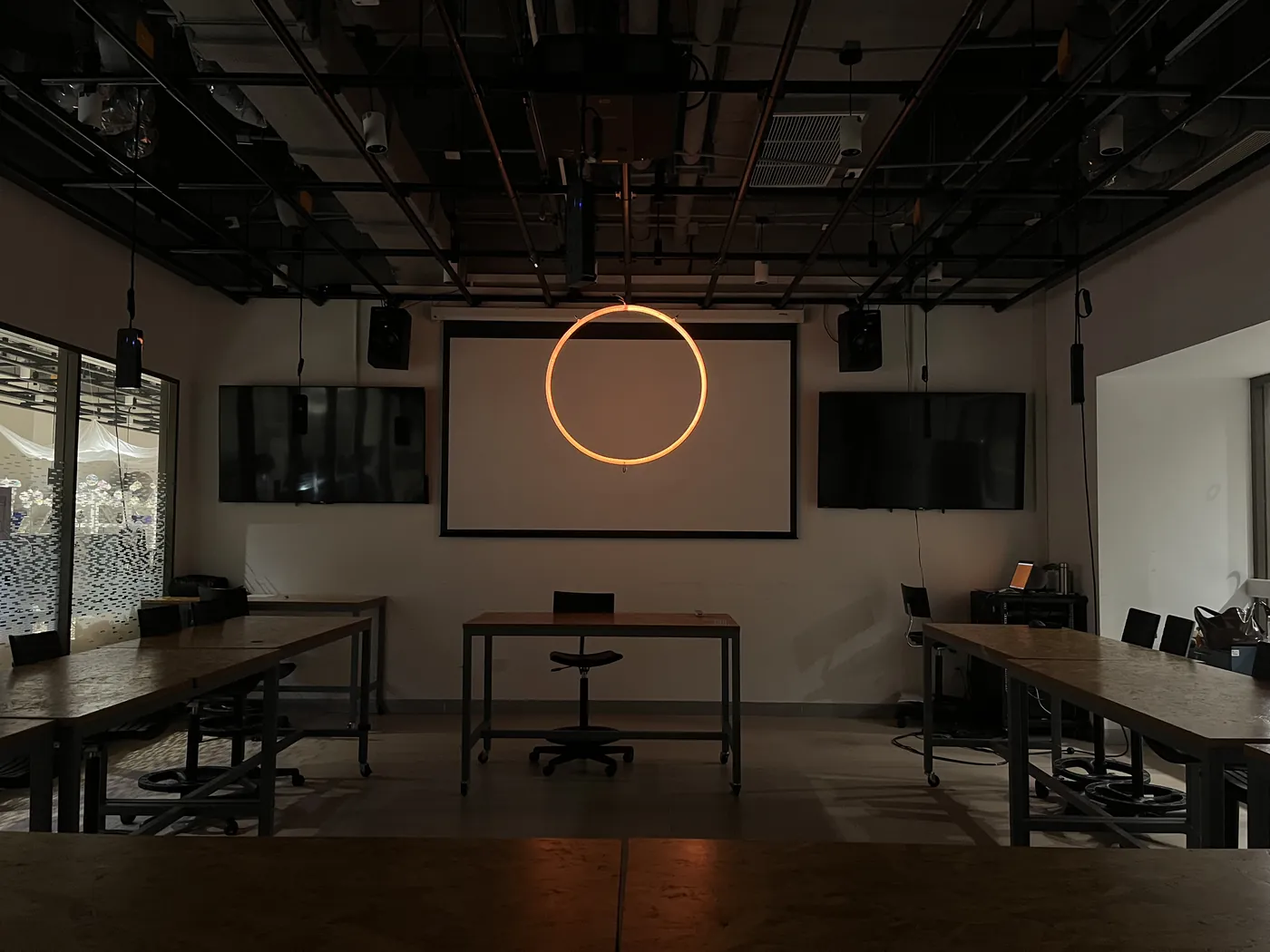
Ephemeral draws a temporary line of light through a shared space: a fifty-meter strip from the ground to the rooftop of my high school in 2021, then a ring of LED light hung at midnight from an NYU Shanghai rooftop in 2024.
Each version has to pass through the people and rules that govern its site: administrators, property management, regulations, security guards. Their refusals changed the material, the scale and the form. The moment I was forced to compromise was when the work found its true meaning. Materials are never only mine to decide. Space isn’t either.
Visuals are the result; the struggle is the process. AI can generate urban-scale land art, but it cannot negotiate with a government, face resident complaints, or weigh waterways, ecology, noise and security. That negotiation is the work.
Process
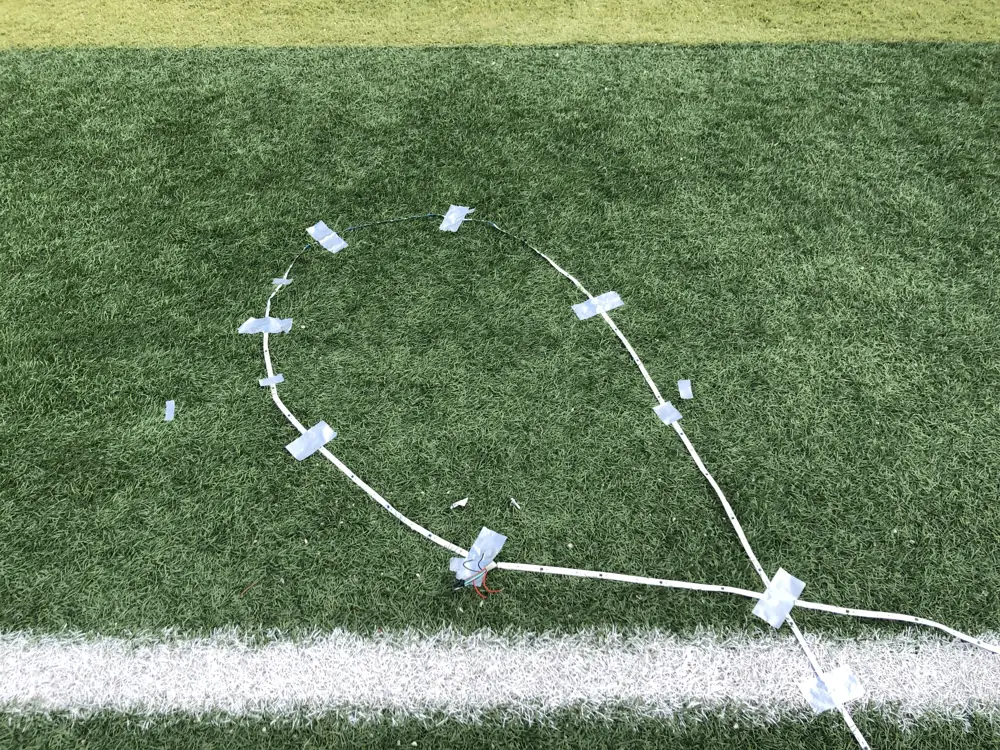
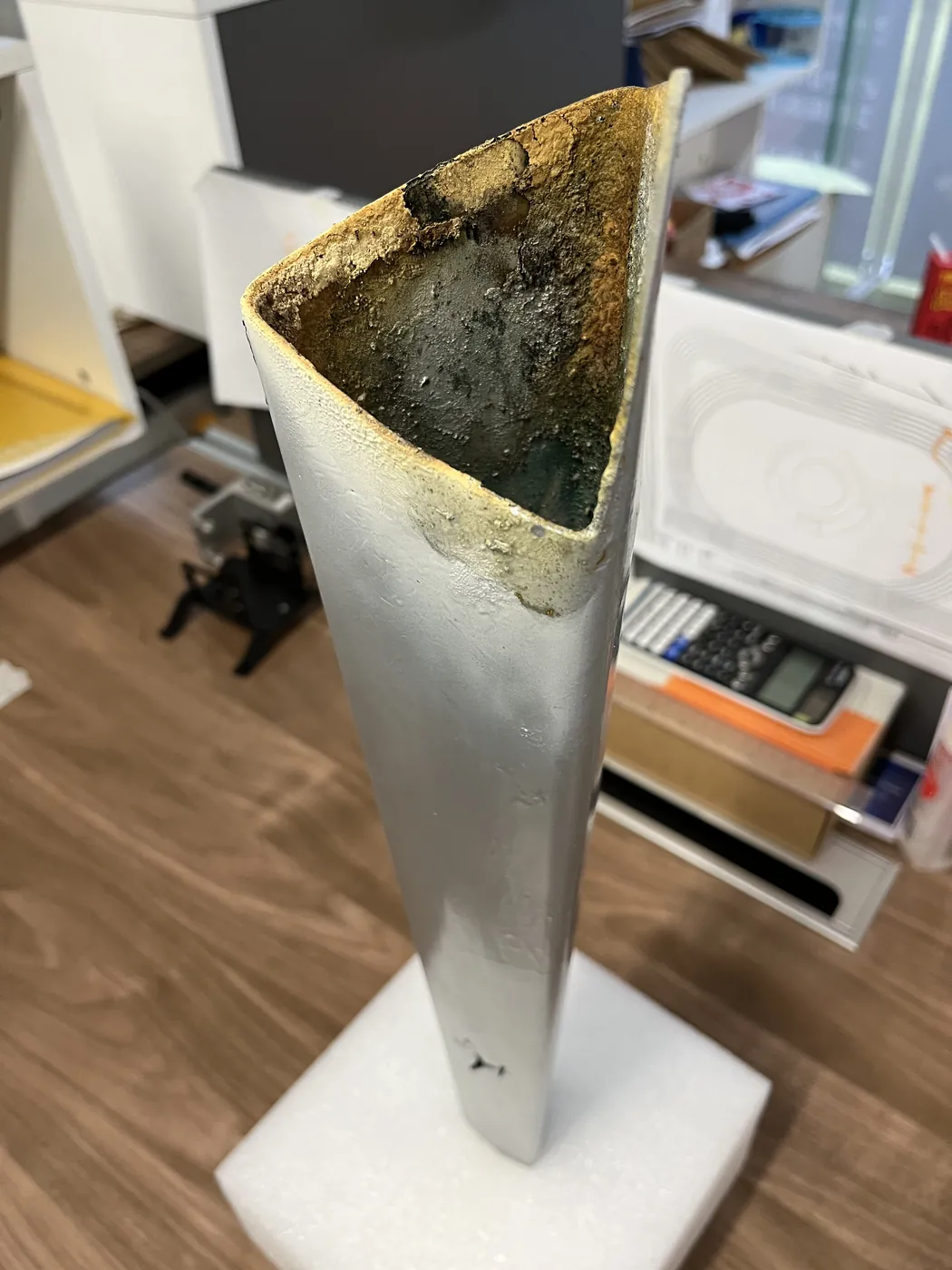
Models, rigging and the negotiations behind each phase.
The first plan used real flames, inspired by the Olympic opening ceremony: paraffin wax melted onto cotton rope, rope soaked in alcohol. The school administration rejected fire outright, so LED lights and smoke replaced it, re-soldered, re-bound and re-tested with my team until 4 a.m.
A helium balloon was also calculated. It needed to be 1.2 meters across and cost 3,000 RMB, far over budget.
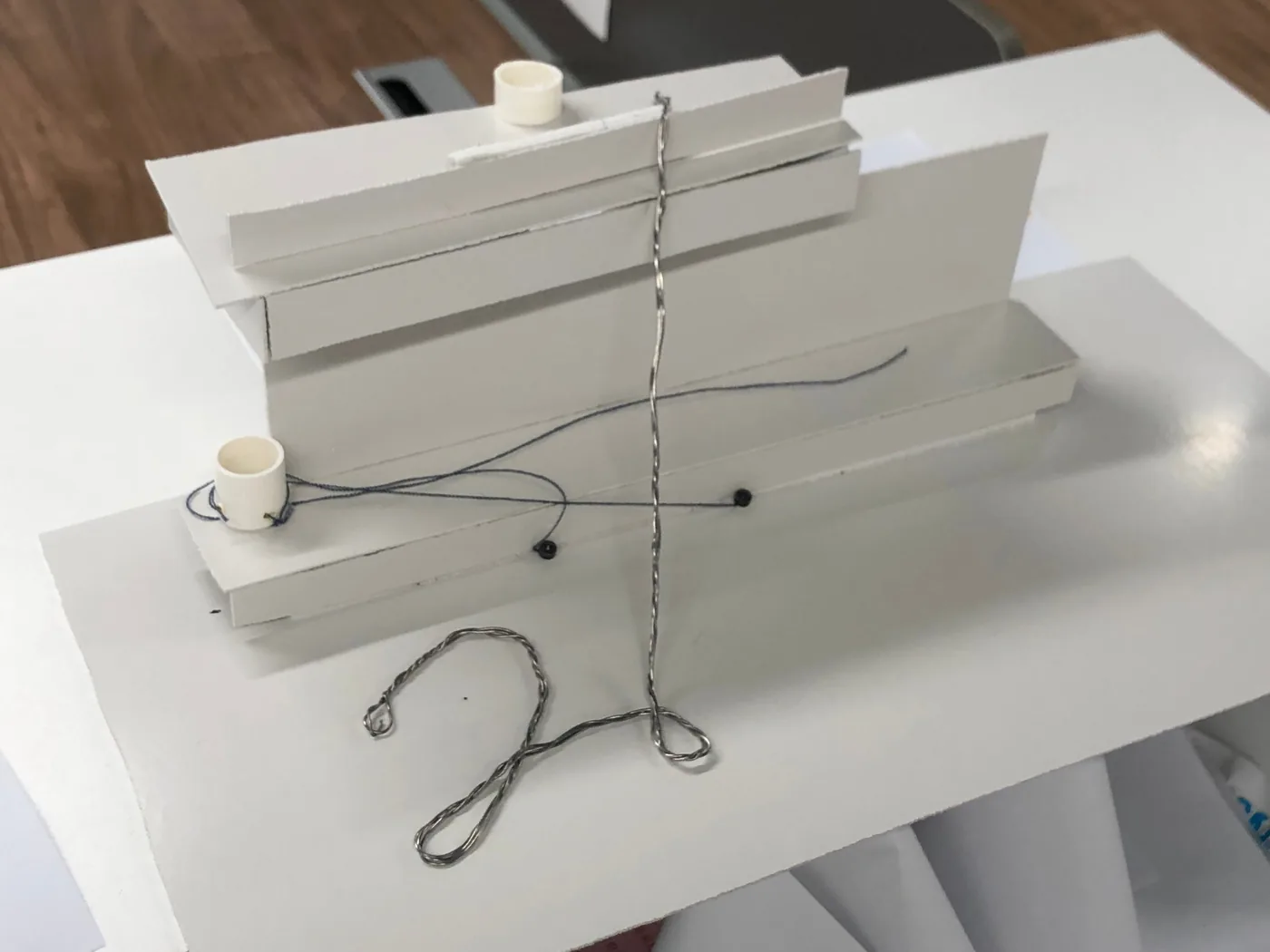
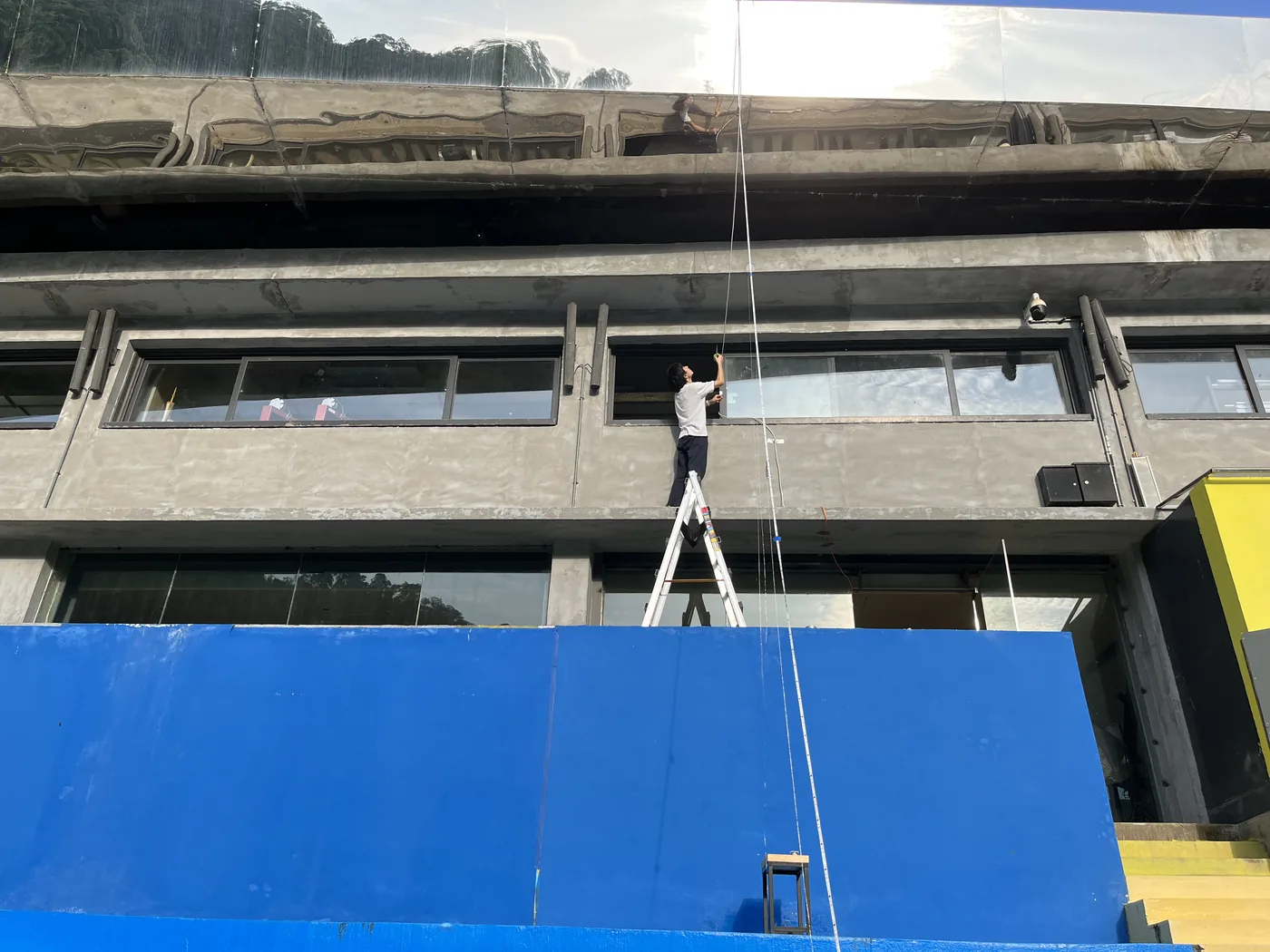
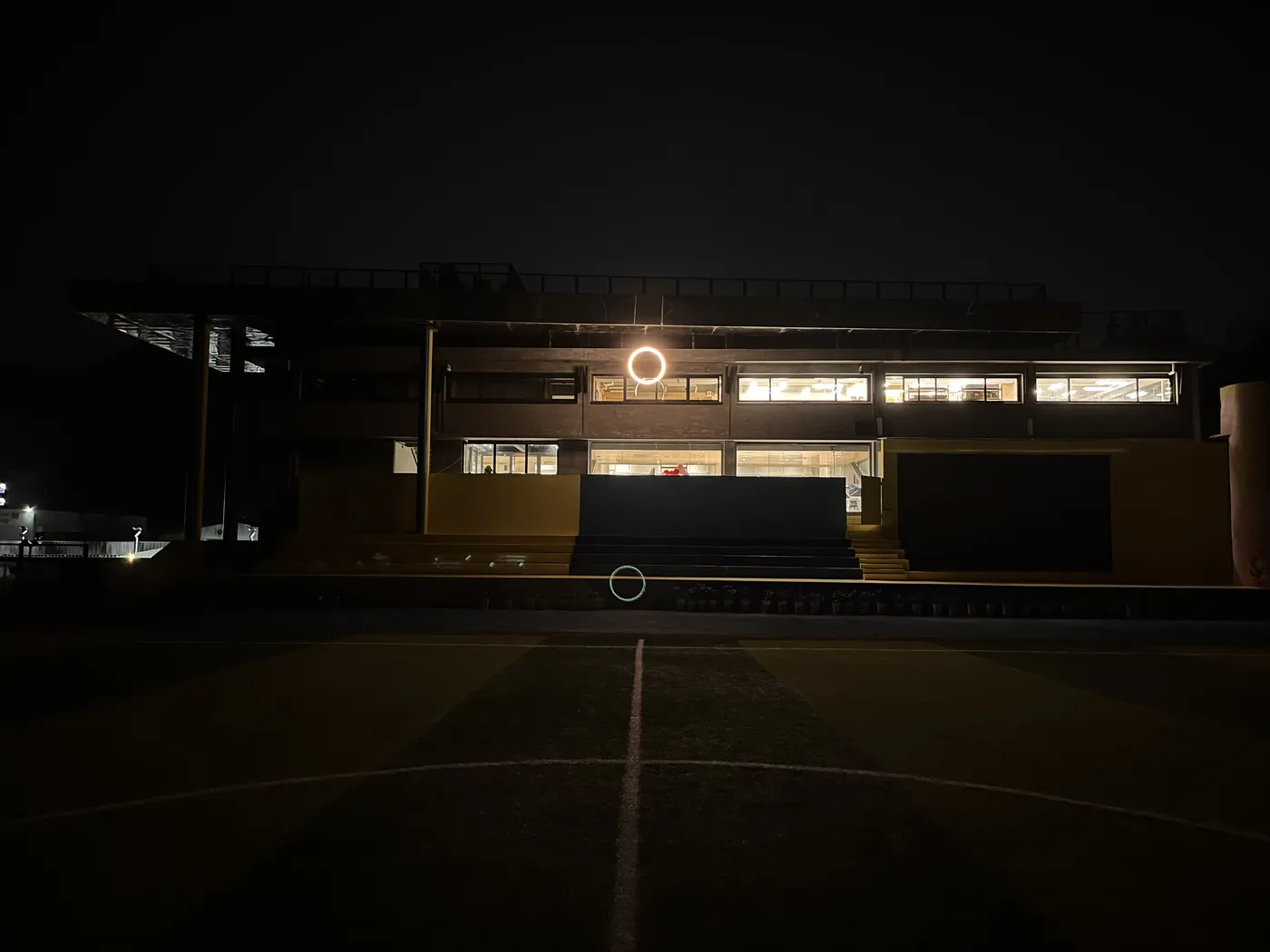
The university doesn’t allow hanging items from heights, so the ring meant dealing with security, property management, regulations and liability.
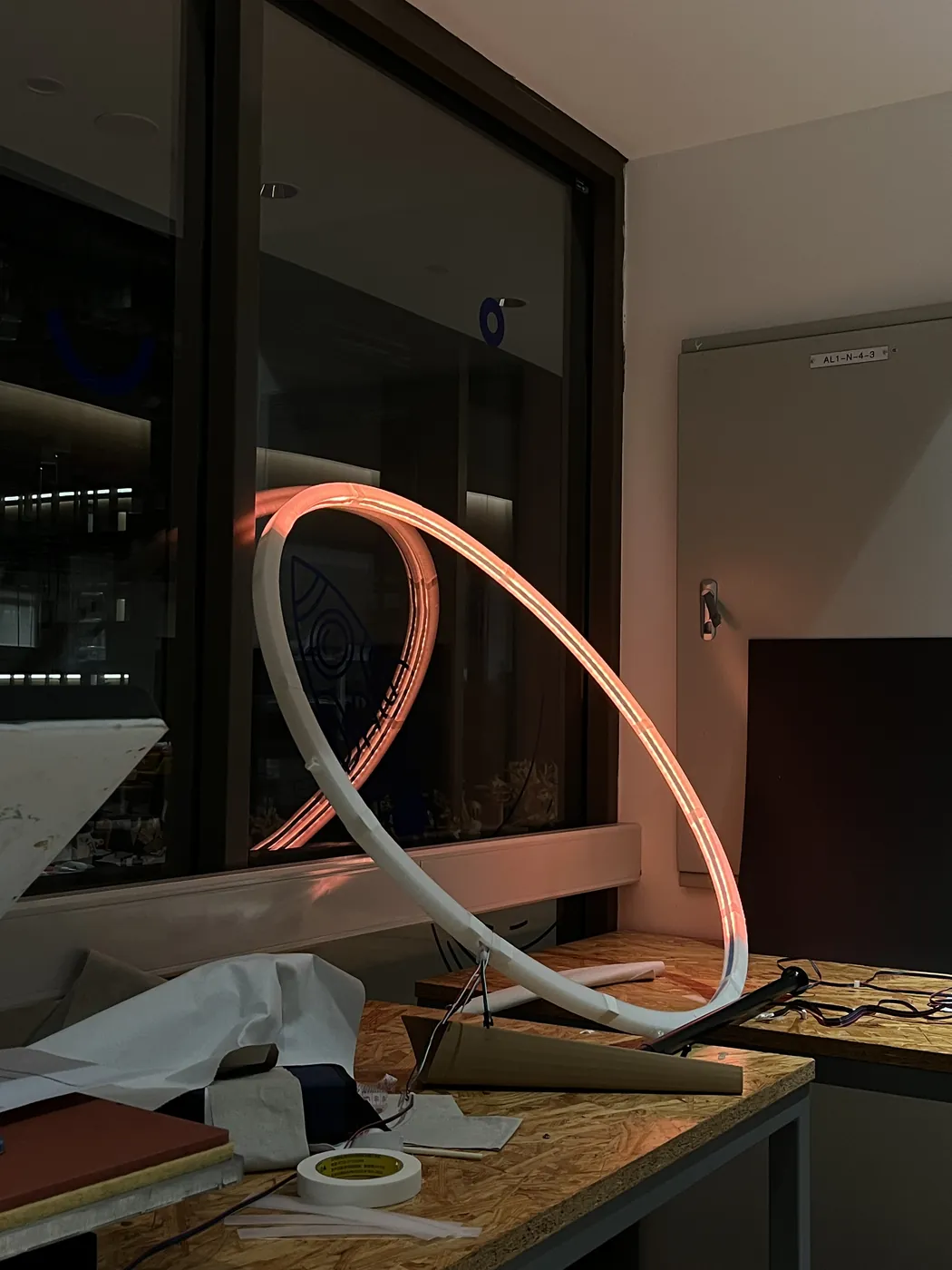
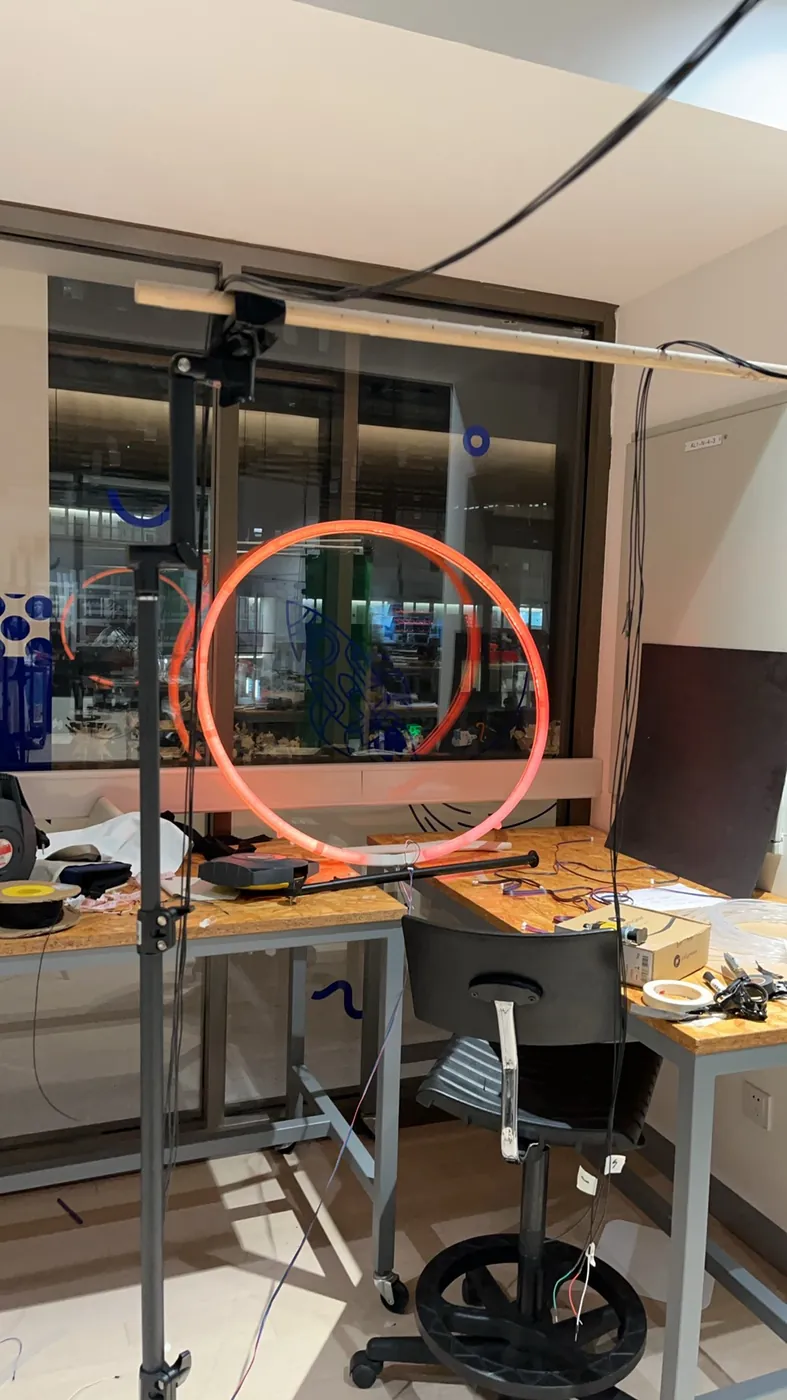
Driven through a signal line over ten meters long, the ring suffered voltage drop and its colors broke into noise. With the lab assistant, I measured the voltage along the line and rewired it: the LED strip split into two parallel segments, with thicker copper wire to reduce Arduino signal loss.
Each proposal starts from its permits: special-event and lane-closure approvals in San Francisco, light, noise and marine permits in Sydney, restricted-zone and ferry coordination in Hong Kong. Legal compliance first, minimum disturbance, and every element reversible.